New research shows virtual treatment for people with severe eating disorders can prevent inpatient admissions and support recovery after hospital
People with severe eating disorders are most at risk of becoming unwell again in the first two months after leaving hospital. New research from Oxford Health shows that this difficult period can be supported in a different way, using a virtual treatment service delivered in people’s own homes.
Oxford Health is pleased to announce the publication of an evaluation of Step Care in the Journal of Eating Disorders. This is the first prospective study to look at a fully virtual, intensive treatment service, using multi-disciplinary, integrated enhanced cognitive behaviour therapy (CBT-E), designed to support people as they move between inpatient care and community services.
What is Step Care?
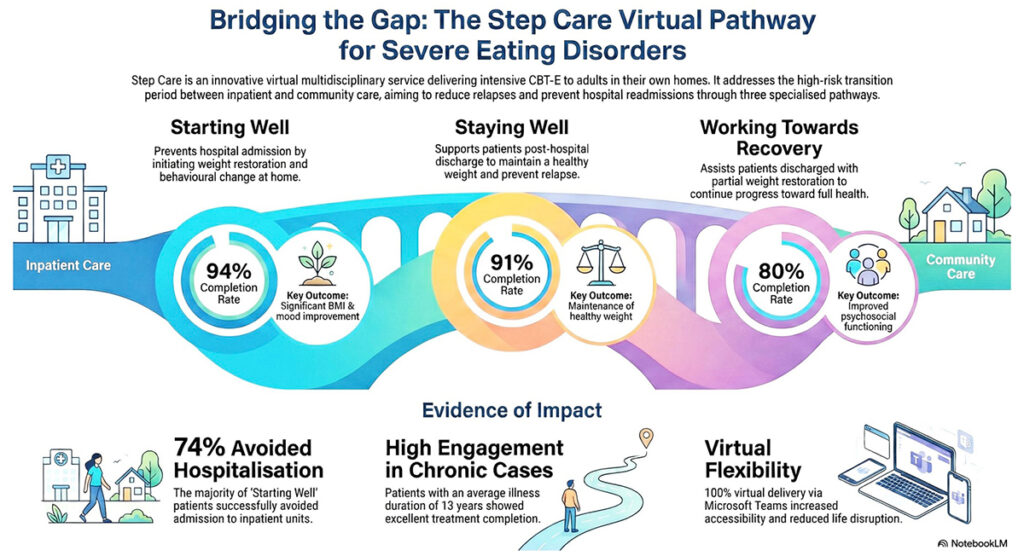
Step Care is a virtual service developed through the HOPE Provider Collaborative to improve care for adults with severe eating disorders. It was created in response to well‑known challenges, including fragmented transitions between services, repeated hospital admissions, and limited access to intensive day treatment.
The service is delivered entirely online and brings together a multidisciplinary team, including professionals from psychology, nursing, dietetics and art therapy. Step Care offers structured support through three clear pathways:
- Starting Well, is for people at risk of needing hospital care, with the aim of avoiding an admission
- Staying Well offers post‑discharge consolidation, supporting people as they leave inpatient services
- Working towards Recovery, is for those who have started to restore weight and are working towards longer‑term recovery.
Lucy Gardner, Professional Lead Dietitian within the Step Care service said, “Nutrition plays a crucial role in mental health, yet access to the right level of dietetic support is often inconsistent. Our model offers a clear, evidence‑informed way to tailor dietetic input to individual need, delivering CBT‑E virtually as part of a multidisciplinary team. This ensures people receive timely, targeted support and helps us use our specialist dietetic workforce where it has the greatest impact.”
What did the research find?
The evaluation showed high levels of engagement and completion, including among people who had been unwell for a long time.
People supported through the Starting Well pathway showed significant improvements in:
- Body mass index (BMI)
- Eating disorder symptoms
- Psychosocial impairment
- Mood
Most people in this group were able to avoid hospital admission.
The Staying Well pathway helped people maintain weight and reduce the impact of their illness during the period when relapse risk is highest. Unplanned hospital admissions were rare, and most people were successfully supported to step down into community care.
Sharon Ryan, Nurse Lead within the Step Care service, explained:
“The weeks after leaving hospital are often the most fragile. Step Care provides consistent multi-disciplinary support at that point, helping people maintain their recovery with support to feel safe and confident out of hospital. I’m incredibly proud of what the team has achieved so far, and excited about how this model can continue to shape the future of eating disorder care beyond hospital.”
Why this matters
This study shows that intensive, evidence‑based treatment can be delivered safely and effectively at home, using virtual care.
“Step Care was designed to bridge the gap between inpatient and community services. The findings show that intensive, evidence‑based treatment can be delivered safely online, providing continuity of care at a time when people are most vulnerable.” shares Agnes Ayton, Clinical Director for the HOPE Provider Collaborative.
Adding “What is particularly encouraging is the level of engagement and the positive outcomes, even for people who have been unwell for many years. Most people were able to avoid unplanned hospital admissions and successfully step down into community care.”
By supporting people at the right time, in the right way, Step Care offers a new approach to supporting recovery from an eating disorder in a setting that fits around people’s lives.